In the Hindu Shaiva tradition, Arunachala is revered as Shiva himself in the form of a mountain. Devotion is part of everyday life here — in the Girivalam walk, in prayer, and in the way people relate to the hill.
Come with curiosity and respect. Let Prakashraj introduce you to the stories and everyday traditions of his home.
From Ramana Maharshi’s years in a hillside cave to the pilgrims and
sadhus along the road today, Arunachala is a place of living worship.
01
Arunachala & Shiva
For devotees in the Hindu Shaiva tradition, the mountain is Shiva in a visible form. This relationship is at the heart of Arunachala’s sacred identity and the devotion that surrounds it.
Ramana Maharshi arrived in Tiruvannamalai in 1896. He lived in Virupaksha Cave on the hillside, then higher up at Skandasramam with his mother. After her death he settled near her burial place at the foot of the hill. This became Sri Ramanasramam.
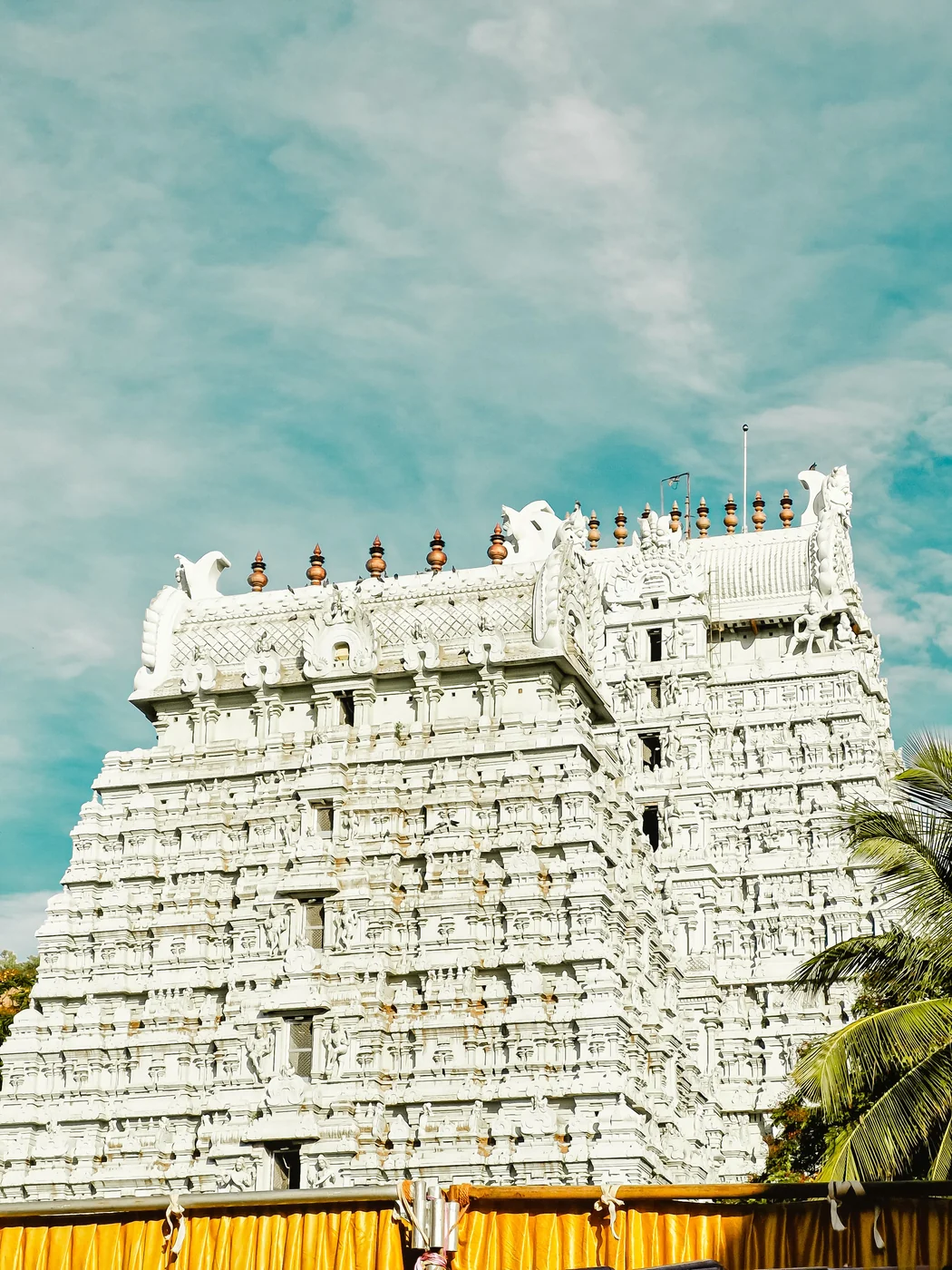
The gopurams, or gateway towers, mark the temple precinct at the foot of Arunachala. In this town, devotion to Shiva can take you into the temple for worship or out along the road for Girivalam. The temple and Sri Ramanasramam are both traditional starting points for the walk.
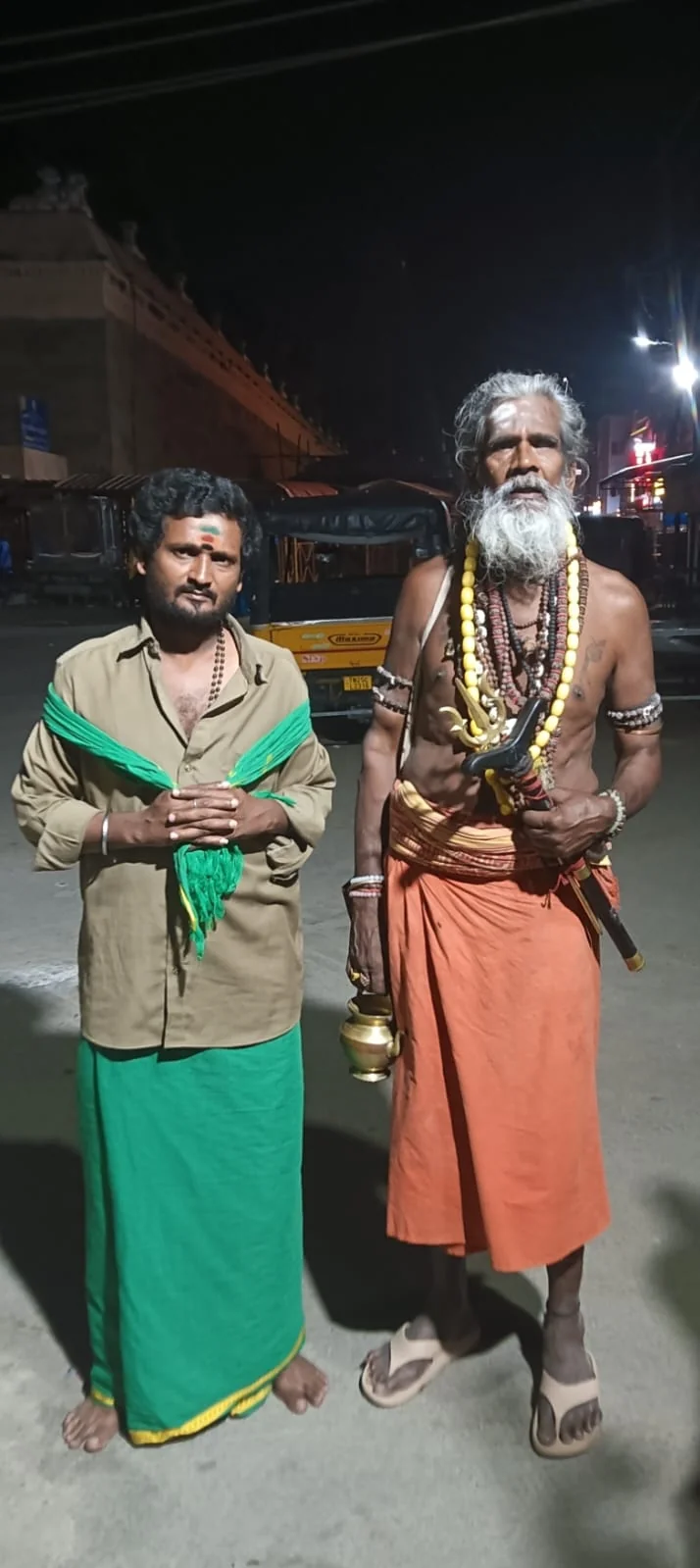
You may see sadhus along the pilgrimage road or near a shrine. Some live on alms. Give people space to pray or sit in silence, and ask before taking a photograph. A conversation begins with the other person’s invitation.
Girivalam is the devotional walk clockwise around Arunachala, a circuit of approximately 14 kilometres. It is a living act of worship, especially associated with full-moon days.
These are places of living worship. Follow local guidance, ask before
taking photographs, and give people the space to practise their
traditions. The stories here are an introduction, not a promise of
access or inclusion in an experience.
The Girivalam walk around Arunachala
See the eight directional lingams on the interactive map and read how
the walk is done.